
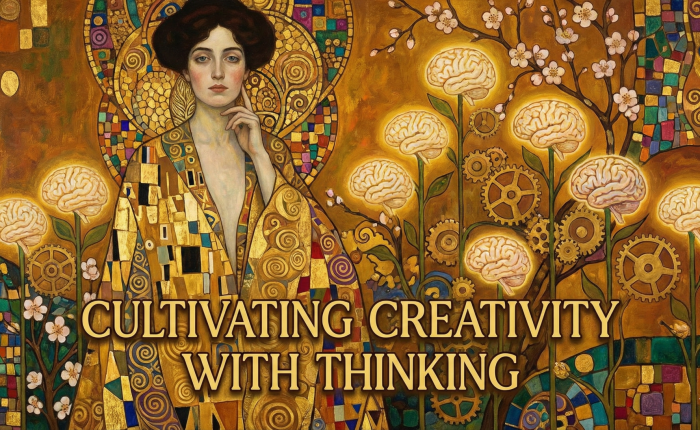
The problem with creativity is that it requires effort. You must wrestle with an idea enough to want to see it “produced”.
I’ve always admired creative individuals and the act of creativity itself. But I know it requires that the mind burn and churn out ideas. And many of these ideas won’t work. Many are impractical.
This process is expensive from a mental perspective. One must go down the creative path and to think those first thoughts…. to ask those first questions…. and then bump their brains against many ideas that are ALREADY OUT THERE, that already exist. Now you must find a unique path in this swirl of chaos.
I think the problem with creativity is that we think this is a state where only the most gifted or innately talented or privileged can enter. The truth is that the act of creativity requires a long, almost exhausting trail of trials and efforts before any product is invented, masterpiece is painted, or exotic piece of furniture is crafted…before any Olympian wins a gold medal.
Remember these are efforts of the mind that one is literally bringing out into tangible reality. It is a mistake of our push-button “everything this instant” culture to think that the artifacts of creativity are also push-of-the -button.
A quilt, a symphony or a successful home goods operation like Anthropolpogie were made by individuals who were and are truly moved and inspired by the act of creating…THE PROCESS of making.
It’s the hundreds upon hundreds of incremental steps that are neglected by ALL outside spectators. All The risks and the monotonous efforts, all the trials and embarrassments, all the “looking foolish” or “looking like a show off” or the mind-numbingly boring experiences are felt in FULL FORCE by the individual who tries to make the creative effort.
The 2026 Olympics are almost here and I’m reminded of the 1990’s and early 2000’s.To become one of the world’s top Figure skaters and Olympians, Michelle Kwan began skating at age 5. At age 8, she started waking up at 4:00 AM and heading to the rink at 5:00 to skate for 2 hours before heading to a full day of elementary school. After school she was back at the rink for two more hours of practice. The amount of effort was insane, yet most of us just think of her as immensely talented.
One of the biggest thoughts that I find sabotaging my own efforts is the idea that “Hey, all of this creative effort may go in vain”. The consideration that all these efforts might not be the result of anything majestic or lasting or even anything briefly captivating.
As Quest Protein Bar billionaire Tom Bilyeu (who grew up in a lower middle-class home) says “The struggle is guaranteed but the success is not”. And that’s the nature of the game.
By putting out efforts you’re investing not so much in the lottery but in the stock market. The stock market is a more reliable means to wealth acquisition, yet still risky. You can wait to be lucky and “in shape” or you can start making incremental moves now. And, when I say incremental, I mean small moves in your thinking. Just your thoughts will do for now. Training your thoughts to keep going towards your goals is often the first best form of training.
Say to yourself something like this, “I know I’m imperfect, but I have achieved X goal in the past”. Reflect on the little accomplishments you have completed by yourself through your own efforts.
The next thing you must do is try to notice any slightly negative thoughts you have about yourself. You will notice how constantly an effortlessly it is to think badly about yourself. The steady drip, drip, drip of negativity about yourself OR YOUR PAST or your current lack of success isn’t helpful towards what you want to achieve.
If you can effortlessly think negatively about yourself, think about changing that mindset to think effortlessly positively about yourself. True, both scenarios may be slightly delusional…but I think you can guess which thought is more helpful than the other.
Training your continual act of thinking and imagination will be the most important step you can take at the beginning of this creative process.

 A Slice of My Trash, Travels and Tots